The stones serious collectors are acquiring
Ruby, sapphire, and emerald; the three stones defining the investment-grade market, and what separates a collector's piece from everything else in the category.
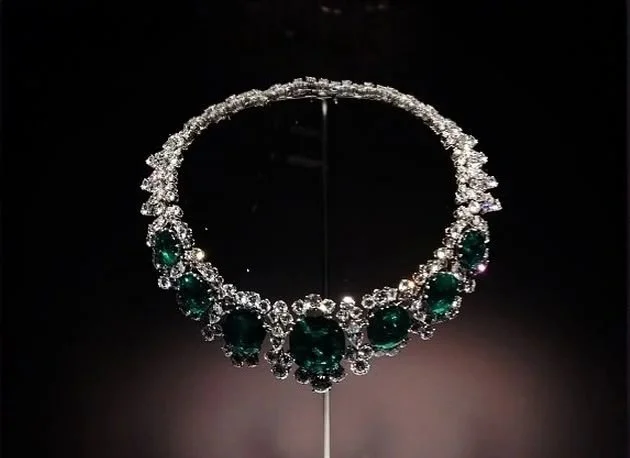
Colored gemstones are moving from the periphery of private wealth into the center — not because they are beautiful, though they are, but because the supply of anything genuinely exceptional is not growing. The mines that produced the defining material in each of these categories are either depleted, restricted, or producing at declining grades. What exists is what exists.
I source across all three of these categories. What I see at trade level confirms what the auction results show publicly: serious buyers are no longer asking whether gemstones belong in a considered portfolio. They are asking which ones, at what grade, with whose paper and how to get a hold of one.
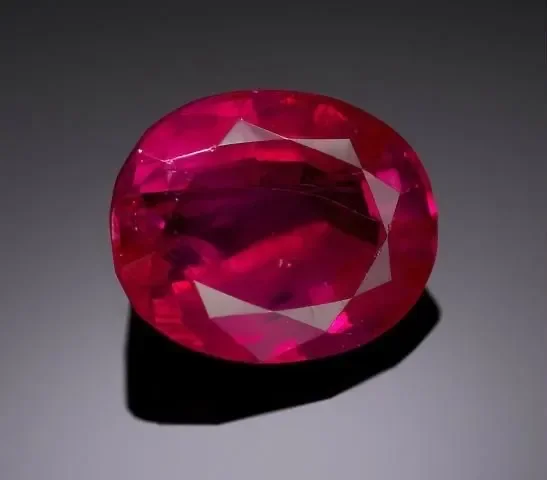
Ruby: the most emotionally compelling stone in the market- and the most secure
I have written about ruby in detail in the previous issue of The Baron Edit. Let me tell you the short version, for context here: two auction records define the current market. The Sunrise Ruby — Burmese, unheated, pigeon blood — achieved over $1.18 million per carat at Sotheby's Geneva in 2015. The Estrela de Fura — Mozambican, unheated, also pigeon blood — sold for $34.8 million at Sotheby's New York in June 2023, the highest total price ever achieved for a ruby or any colored gemstone at auction.
Despite increased ruby production in various regions, prices show stable growth. With auction houses exceeding new record bids for ruby lots, which leads to higher prices for cut stones on the market. The investment case rests on a specific tier: fine untreated rubies above three carats are among the rarest gemstones on earth, and the spread between exceptional and commercial-grade material is widening year on year.
What the Estrela de Fura did for the market was clarify something the trade already understood but the broader collector community had not fully absorbed: Burmese origin is not the only path to the highest tier. Mozambique can get there. What it cannot do is skip the certification. Five laboratories confirmed that stone before it sold.
The collector's position: unheated, GRS or Gübelin certified, Burmese or Mozambican origin. Pigeon blood designation where achievable. Below that threshold, you are acquiring a beautiful stone. Above it, you are acquiring something that compounds.
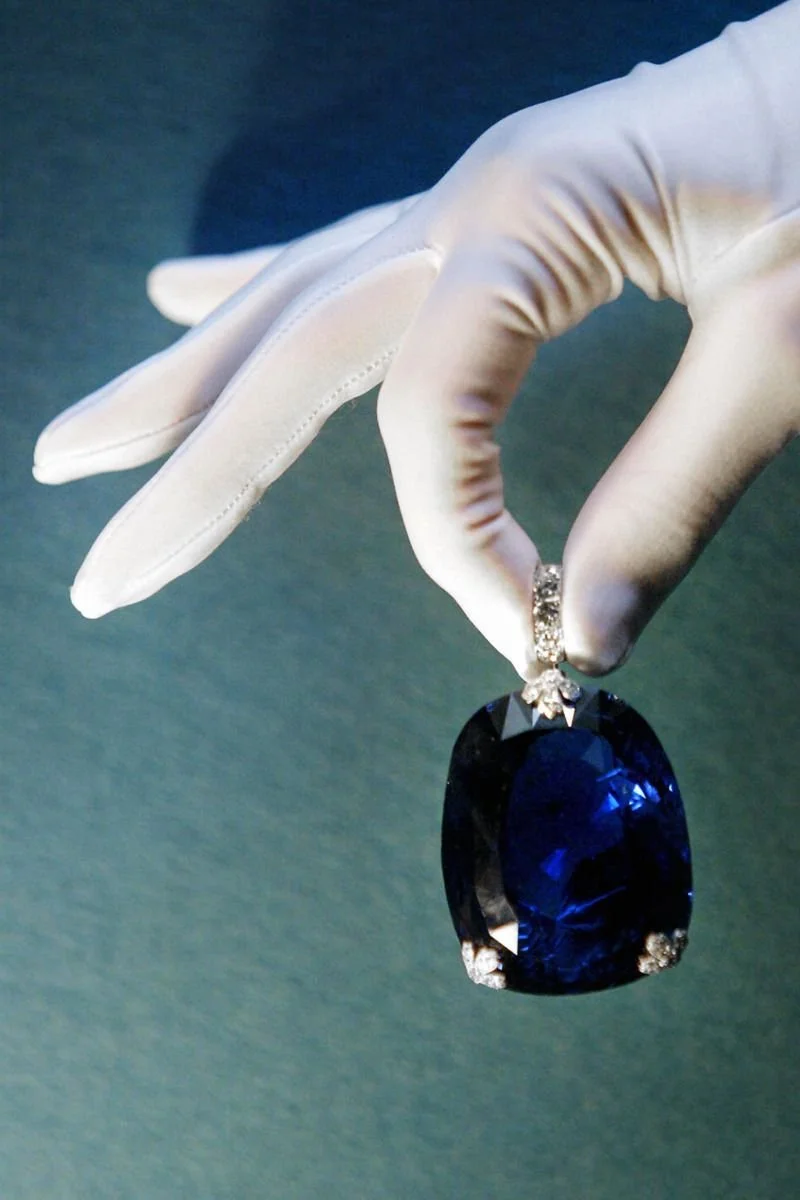
Sapphire: the category with the longest institutional memory
All Kashmir sapphires on the market today are historical gems , mined over a century ago, which adds to their mystique and value. The deposit that produced them was discovered in 1881, yielded its most significant output within roughly five years, and was essentially exhausted by the early 1900s. There has been no meaningful commercial production since. Every Kashmir sapphire in circulation today is already over a hundred years old.
The color is specific and unreplicable: a velvety cornflower blue that holds its intensity across all lighting conditions. Unlike sapphires with purplish or grayish undertones, stones from Kashmir have a luminous brilliance often compared to the iridescent blue of a peacock's neck. No other origin produces this. Sri Lanka produces beautiful sapphires. Burma produces fine sapphires. Neither produces Kashmir.
When I am sourcing sapphire for a client at the investment-grade level, the first question is always Kashmir. Not because other origins do not have merit — they do — but because Kashmir is the only origin whose supply is structurally, permanently finite. That finitude is priced into the market, and it will only become more so.
The collector's position: Kashmir origin, unheated, Swiss laboratory certification — SSEF, Gübelin, or GRS. Where Kashmir is not accessible or within budget, unheated Burmese or Sri Lankan material with impeccable documentation. Treatment status is as significant here as in ruby. In 2025, collectors prioritize unheated stones, as heat treatment significantly reduces long-term appreciation. Kashmir stones remain museum-grade collectibles commanding record premiums.
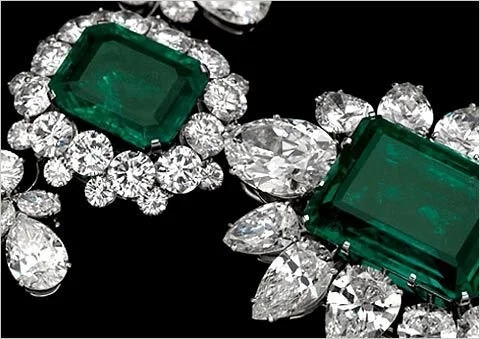
Emerald
Emerald is the most misunderstood investment stone in this category. The buyers who apply diamond logic to emerald misread it entirely, and usually either overpay for the wrong thing or dismiss the category on the basis of inclusions that are not a flaw but a feature.
Let me be direct about this: A No Oil certificate from a reputable laboratory is the ultimate prize for a collector. It proves the stone is so structurally sound and the crystal so clean that it did not require any enhancement to look exquisite. That is the standard I source toward, absolutely, insanely rare. That rarity is the WHOLE point.
The per-carat record for an emerald at auction belongs to the Rockefeller Emerald- 18.04 carats, Colombian, mined from the legendary Muzo deposit. Harry Winston paid $5.5 million for the stone in 2017, at $305,000 per carat. The total record belongs to the Aga Khan Emerald, a 37-carat Colombian stone set in a Cartier brooch commissioned in 1960. It sold for $8.8 million at Christie's Geneva in 2024- a world record for the most expensive emerald sold at auction.
What these two stones share is Colombian origin, Muzo or equivalent provenance, and documentation that left no question unanswered.
Among the major colored gemstones, emeralds are telling one of 2026's most encouraging stories. Average prices per carat rose from $4.47 in September 2024 to $7.46 by December 2025- a sustained upward trajectory driven by constrained quality supply and recovering global demand. Buyers now demand full disclosure of enhancements, and pay meaningfully more when treatment is minimal or absent.
The inclusions in a fine Colombian emerald, the internal landscape the French call the jardin, are not a defect. A completely inclusion-free emerald of significant size is almost certainly synthetic or misrepresented. The emerald I am looking for on a client's behalf has deep, saturated green, good transparency, inclusions that do not threaten the stone's integrity, and a treatment report that leaves nothing ambiguous.
The collector's position: Colombian origin, Muzo where achievable, GIA or Gübelin certification, minor oil or none. Color is evaluated before clarity- always. A vivid, saturated stone with expected inclusions is the investment.
What these three have in common
Each of these stones is natural, with no “laboratory-created” equivalent that holds value. Each is certified by reputable institutions whose reports are accepted by Sotheby's, Christie's, and Bonhams. Each comes from sources that are either depleted, restricted, or producing at declining grades.
Unlike stocks on a screen or property tied to one location, a rare sapphire or ruby can cross borders, be discreetly passed through generations, or be liquidated in global auction houses. That portability reaches a certain kind of collector, it is the primary thesis.
The distinction between investment-grade and simply expensive comes down to three words: origin, treatment, documentation. Without all three confirmed, a stone's beauty is its only attribute. And beauty, on its own, does not compound.
A note on private acquisition
The stones described in this piece are not found at retail. They are sourced through direct relationships with the global trade, assessed against current market data, and presented to clients with complete documentation before any decision is made.
Private inquiries are handled personally by Claudia. Contact via WhatsApp or the SLIMMS website.