What your ruby certificate doesn't tell you
Rubies beyond origin, heat, and the gap between what a document confirms and what a stone is actually worth
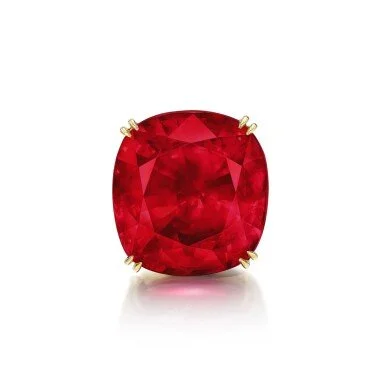
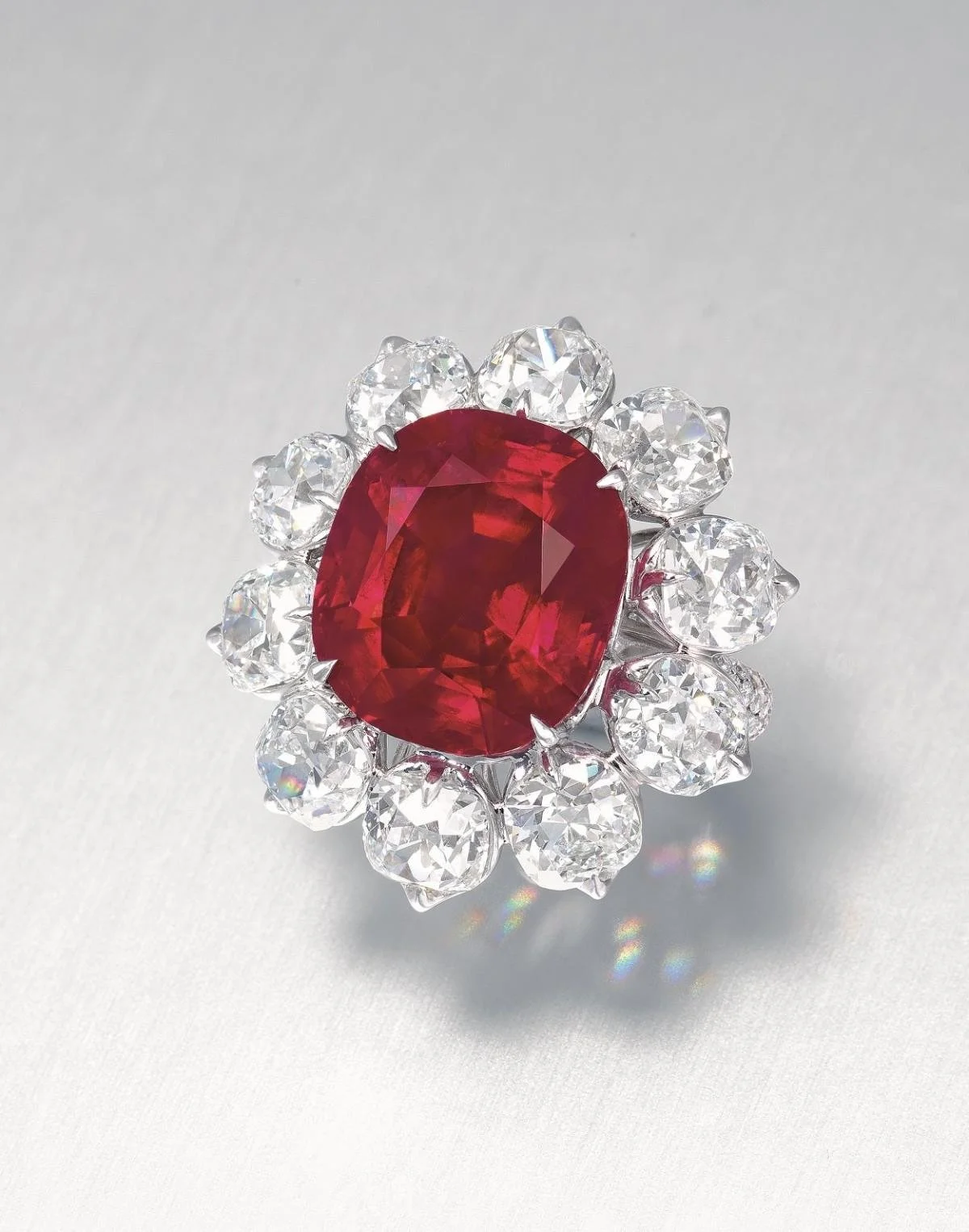
In June 2023, a 55.22-carat ruby from Mozambique sold at Sotheby's New York for $34.8 million, a world record for a ruby and for any colored gemstone ever sold at auction. The Estrela de Fura achieved $630,000 per carat. Eight years earlier, a 25.59-carat Burmese ruby called the Sunrise Ruby sold at Sotheby's Geneva for approximately $30.4 million, over $1.18 million per carat. A smaller total. A higher per-carat figure. Two different records, held by two different stones, from two different countries.
Both are called ruby. Both are corundum colored red by chromium. What separates either of them from the ruby in a retail jewelry case is not quality in any conventional sense. It comes down to three things: origin, heat, and the specific laboratory that assessed both. Understanding these factors is the difference between owning a beautiful object and acquiring something with genuine, lasting worth.
Origin: the mine matters more than the stone
Ruby forms in metamorphic rock under conditions of extreme heat and pressure. Not all metamorphic environments produce the same result. The geology of Mogok, in upper Burma (now Myanmar) creates chromium concentrations and crystal structures that no other deposit on earth has fully replicated. Mogok rubies carry what gemologists call internal light. It is not a stylistic description. It is a physical phenomenon: chromium absorbs daylight in the blue-green spectrum and re-emits it as red. The effect is strongest in Mogok material, and it is why Burmese ruby has historically commanded the highest per-carat prices in the market.
The Estrela de Fura complicated a long-held assumption. For decades, Mozambique rubies were considered second-tier, beautiful, available, but without Burma's prestige. Certified by five leading gemological laboratories, including GRS, Gübelin, and SSEF, as natural, unheated, and of exceptional color, the Estrela de Fura sold for more than any ruby before it. Mozambique now sits alongside Burma as a source capable of reaching the highest tier of the market. Origin is no longer a simple hierarchy. It is a combination of source, individual stone quality, and independent certification, assessed together.
Origin is not a detail on the certificate. It is the foundation of the valuation. A ruby without confirmed origin, assessed by a recognized laboratory, is a different asset entirely, regardless of how it appears in the light.
Heat treatment: the question the certificate answers, and the one it doesn't
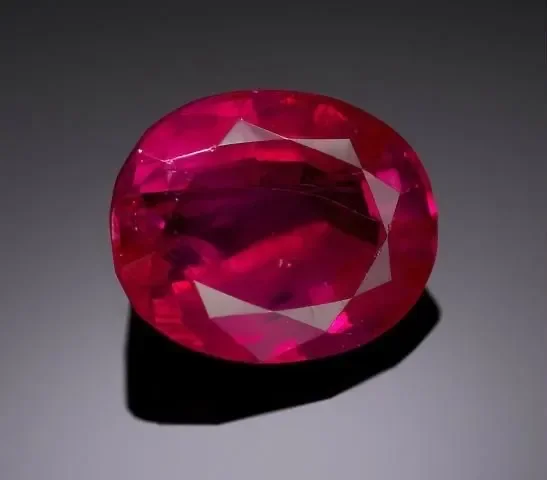
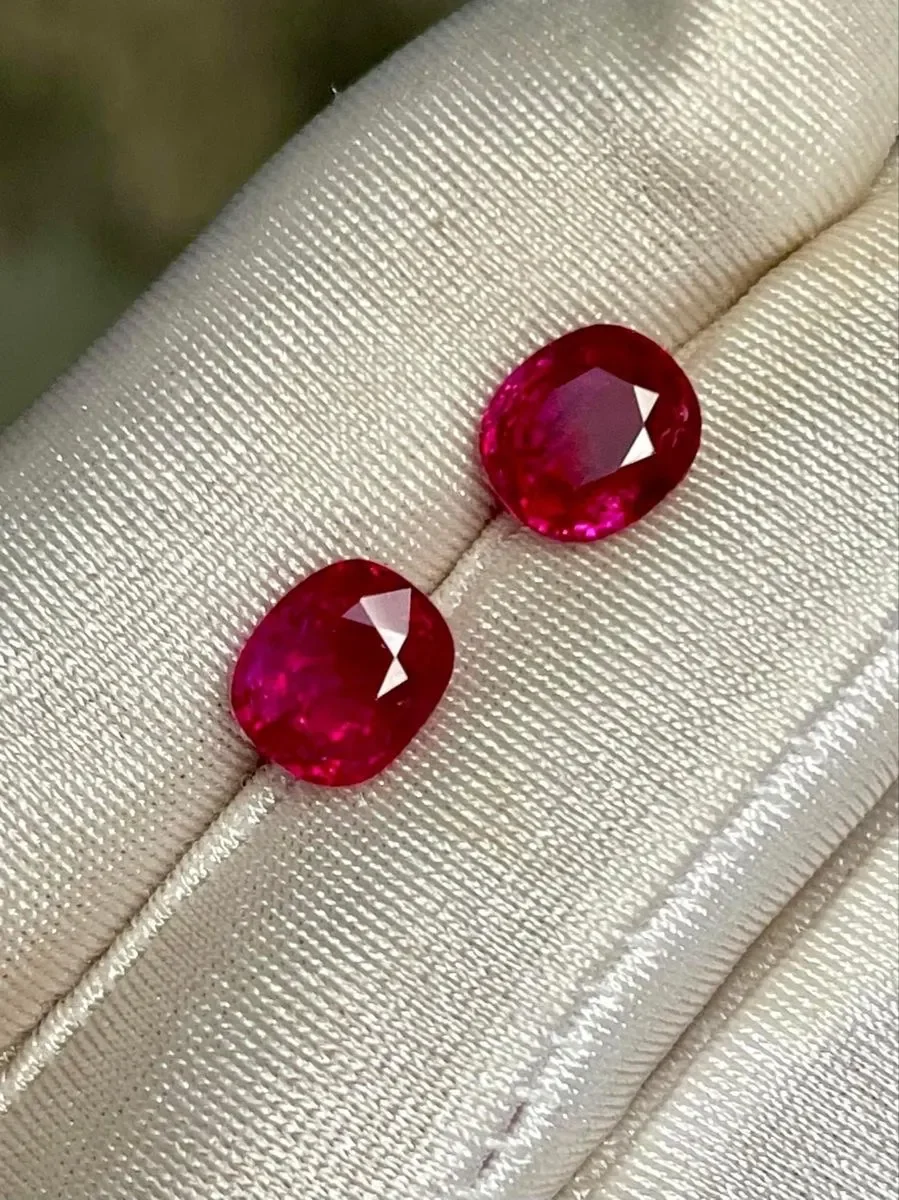
The majority of rubies sold commercially have been heated. This is not a secret in the trade. Heating at high temperatures dissolves inclusions, improves color saturation, and removes the rutile needles that cloud a stone's appearance. The result is a more visually appealing stone at a fraction of the cost of an unheated equivalent.
The price differential for an unheated ruby at significant carat weight is not marginal. Both the Estrela de Fura and the Sunrise Ruby share one characteristic beyond their color: neither shows any indication of heat treatment. That status, confirmed independently by multiple laboratories — is not incidental to their results at auction. It is central to them. An unheated ruby is rare in a way that is verifiable and permanent. Heating cannot be reversed. A stone that is unheated at acquisition will still be unheated in thirty years, when it is passed to the next generation or offered at auction. That permanence is what makes the designation so significant, and so consistently valued by serious collectors and every major auction house operating at this level.
What the certificate does not always tell you is the degree of treatment, or its implications for value. "Indications of heating" on a laboratory report is one of the most common results for commercial ruby. It covers a wide spectrum, from minor clarity enhancement to significant color modification. Two rubies with identical color grades and similar certificates can represent completely different acquisitions depending on treatment history. That reading requires knowledge the document alone does not provide.
The pigeon blood designation: precise, contested, non-negotiable
The term "pigeon blood" appears in ruby marketing with a frequency that has rendered it almost meaningless at retail level. Jewelers apply it to any vivid red stone. It means something far more precise than that.
Pigeon blood is a color designation applied by the Gemological Research Society (GRS) to rubies meeting a specific spectrophotometric standard. Pure, saturated red with a slight blue undertone. No orange. No brown. Saturation at the upper end of the GRS scale. It is not a style description. It is a measurable, repeatable scientific determination made by a small number of qualified laboratories. A GRS certificate carrying the words "pigeon blood" represents one of the most significant designations in the colored stone market. It does not simply describe color. It confirms the stone occupies the rarest tier of ruby production, and the market prices it accordingly.
Both the Estrela de Fura and the Sunrise Ruby carry this designation. It is worth noting that pigeon blood was historically associated only with Burmese rubies. The Estrela de Fura — Mozambican — meeting this standard contributed to what made its result historic. When a retailer uses the phrase without reference to laboratory confirmation, it is decoration. Nothing more.
The four questions before anything else
Before a stone's beauty is relevant, four questions determine its category. These are the questions a private advisor asks on a client's behalf — and the ones no retail environment is structured to answer with full transparency.
What is the confirmed origin? A reputable laboratory report states origin based on analysis of the stone's inclusions, trace elements, and spectroscopic profile. "Origin undetermined" is a legitimate finding. Origin stated without laboratory confirmation is not a finding at all.
Has the stone been heated, and to what degree? GRS and Gübelin use a treatment grading scale. "No indications of heating" is the most significant designation. "Indications of heating" is the most common result for commercial ruby. The distinction between them is not minor.
What laboratory issued the certificate, and when? GRS, Gübelin, and SSEF are the three Swiss laboratories whose ruby assessments are accepted by Sotheby's, Christie's, and Bonhams without qualification. GIA is the definitive standard for diamonds. For colored stones at significant value, the Swiss laboratories operate at a different level. A report from one of them is not interchangeable with a report from another institution.
What is the carat weight, and does the size support the premium? Fine unheated ruby becomes exponentially rarer above one carat. Above three carats with a pigeon blood designation and no indication of heating, you are in a category that represents perhaps dozens of stones globally in any given year.
What this means at the point of acquisition
The private acquisition model exists because the retail model is not designed to accommodate these questions. A retail jeweler sells inventory. Their pricing reflects what they paid for a stone, their overhead, and their margin. It does not reflect access to the global memo market, the ability to compare stones across multiple trade sources before committing, or the expertise to read a certificate and identify precisely what it confirms — and what it does not.
When I source a ruby for a client, the certificate comes before the stone. Origin and heat status are confirmed before anything is presented. Price is benchmarked against current market data, not against what the seller paid. And the first question is never "is this beautiful?" It is "is this exactly what it claims to be?"
Beauty is easy to find and see. Integrity of provenance is not. That distinction is where the value lives, and where most buyers, acquiring through retail, are never given the opportunity to look.
Private inquiries regarding colored stone acquisition are handled personally by Claudia. Contact via WhatsApp or the SLIMMS website.