The Colombian emerald: why where it came from changes everything
On Muzo, Chivor, Coscuez, and the internal landscape that no other stone in the world carries.
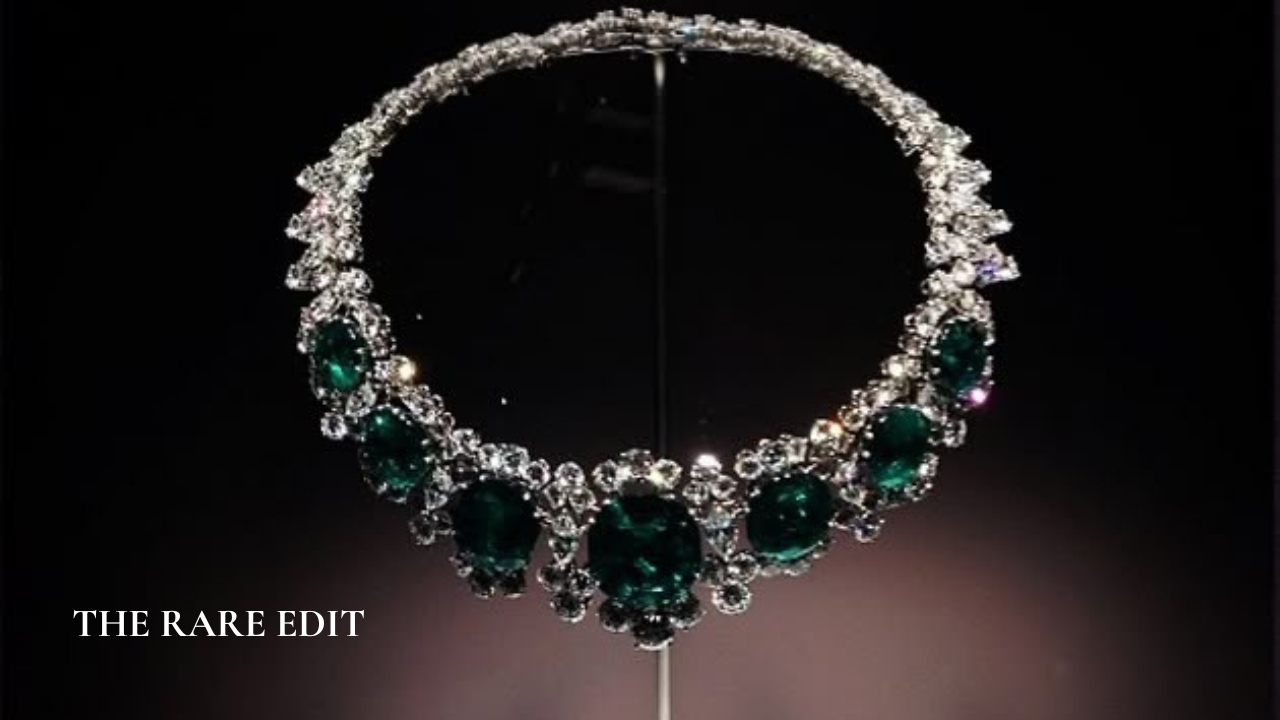
There is a moment when someone who has spent their life thinking about diamonds encounters the world of precious gemstones, the moment when they encounter a fine Colombian emerald for the first time and genuinely stop.
The color of a great Colombian emerald does not sit on the surface. It moves. It shifts between daylight and candlelight in a way that no other stone does. That phenomenon has a geological explanation, and understanding it is the beginning of understanding why Colombia, specifically, and three mines within it, specifically, have defined this category for five hundred years.
Why Colombia?
Emerald is beryl colored green by chromium and vanadium. Beryl forms in many places. The specific conditions that produce emerald colored by chromium...rather than iron, which produces a flatter, less saturated green, are rare. The conditions that produce Colombian emerald are rarer still.
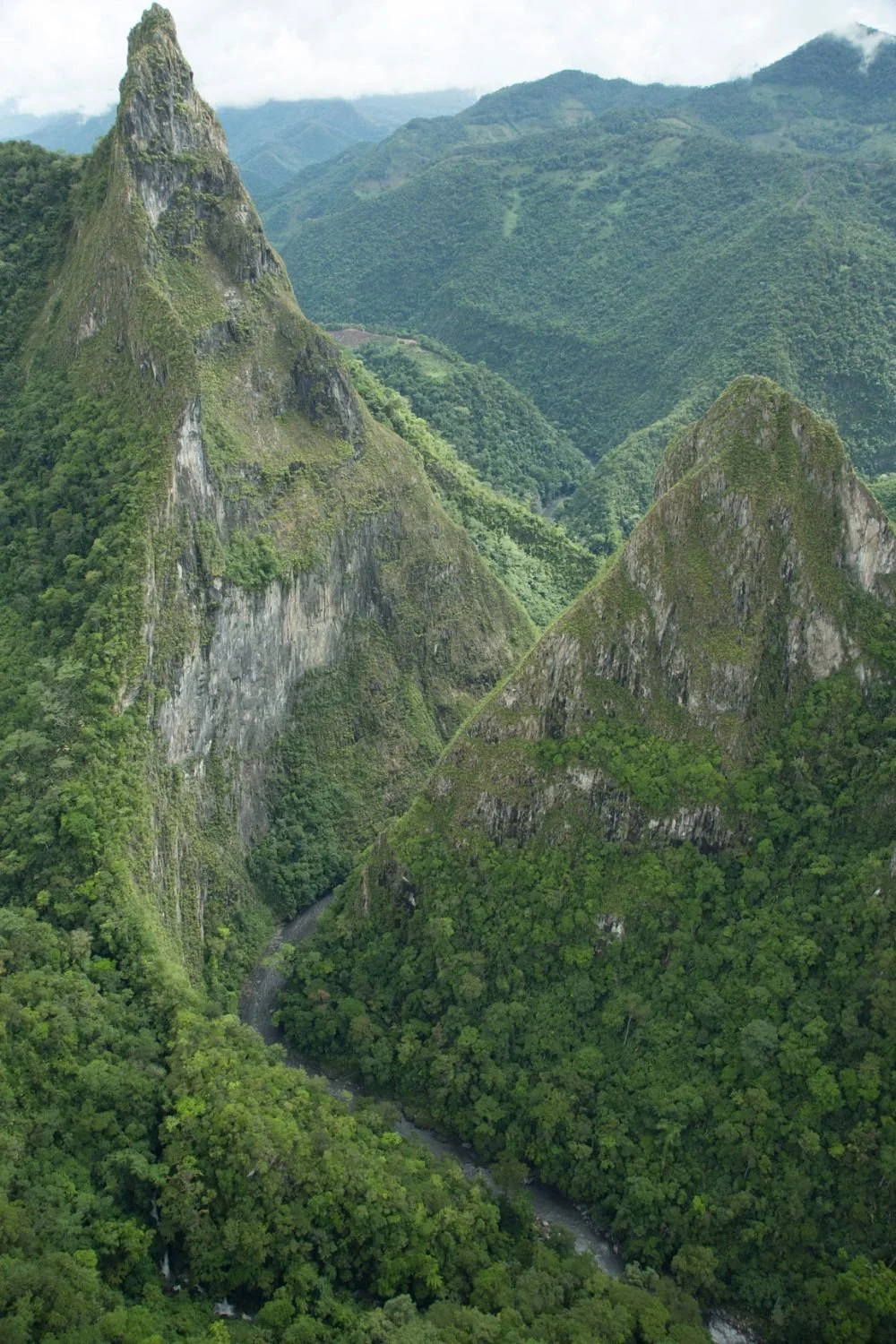
Colombian emeralds are found primarily in sedimentary Cretaceous black shales. Fault-driven hydrothermal activity within the Colombian Cordillera transported mineral-rich fluids and caused the precipitation of beryl within those black shales. That specific geology — black shale, hydrothermal brine, Eastern Andes, does not exist anywhere else on earth in the same combination. Brazil produces emerald. Zambia produces emerald. Neither produces the color saturation or the internal character that Colombia produces at its finest.
The result is what the trade calls the "drop of oil" — that pure, vivid, velvety green many consider the ideal. It is not a marketing description. It is a physical quality produced by a specific interaction of chromium with the crystal lattice under conditions that took millions of years to occur and cannot be replicated.
Three mines
Colombia's emerald production is concentrated in one region: Boyacá, in the Eastern Andes. Within that region, three names define the market. Understanding what distinguishes them is not academic. It changes what you should pay, what you should ask for on the certificate, and what you should hold.
Muzo
Muzo is the oldest mining site, mined on and off for centuries before the arrival of Spanish conquistadors in the 16th century. It remains the most important emerald mine in the world. Muzo stones are associated with an intense, slightly warm green, with a hue that can lean yellow-green. The saturation is exceptional deep, forest green with a warmth that holds across all lighting conditions. Muzo emeralds tend to have fewer inclusions, making them more valued for their clarity and visual cleanliness.
Muzo carries the highest prestige in the market and commands the highest prices per carat at equivalent quality. When collectors refer to "Colombian emerald" as the benchmark, they are usually thinking of Muzo.
Chivor
The Chivor mine was abandoned in 1675 and its location became a mystery that endured for over 200 years, until a Colombian mining engineer named Don Francisco Restrepo located it in 1896 after scouring the countryside for almost a decade. That history matters, it adds to the mine's mythology and to the collector's sense of acquiring something connected to a long, complicated story.
Chivor produces emeralds with a cooler, more bluish green, often with very good transparency. Chivor emeralds tend to have greater clarity and fewer inclusions compared to Muzo emeralds, and are generally smaller but with high crystal quality. Collectors who prefer a calmer, more crystalline tone find Chivor to be the reference origin. The color is cooler, the stone is often cleaner, and the prestige of the mine's history adds a layer that serious buyers recognize.
Coscuez
Coscuez is often referred to as the source of "green fire" emeralds that are lighter and brighter in color, sometimes leaning toward yellowish-green or bluish-green tones. Coscuez emeralds are famous for their large size and some of the largest emeralds found in the world come from this mine, making them highly coveted for significant jewelry pieces.
Coscuez is the most productive of the three and offers the widest range of quality. A serious collector does not dismiss Coscuez on origin alone- a vivid, well-documented Coscuez stone can outperform a mediocre Muzo stone at every level of the market.
One principle applies across all three: individual stone quality weighs more than provenance. An emerald with a Muzo origin certificate and excellent color can reach very high prices- but a mediocre Muzo stone can be worth less than an excellent Coscuez or Chivor one. Always evaluate color, clarity, cut, and treatment before the origin label.
The jardin: the feature that changes everything
A completely clean emerald is not a premium stone.
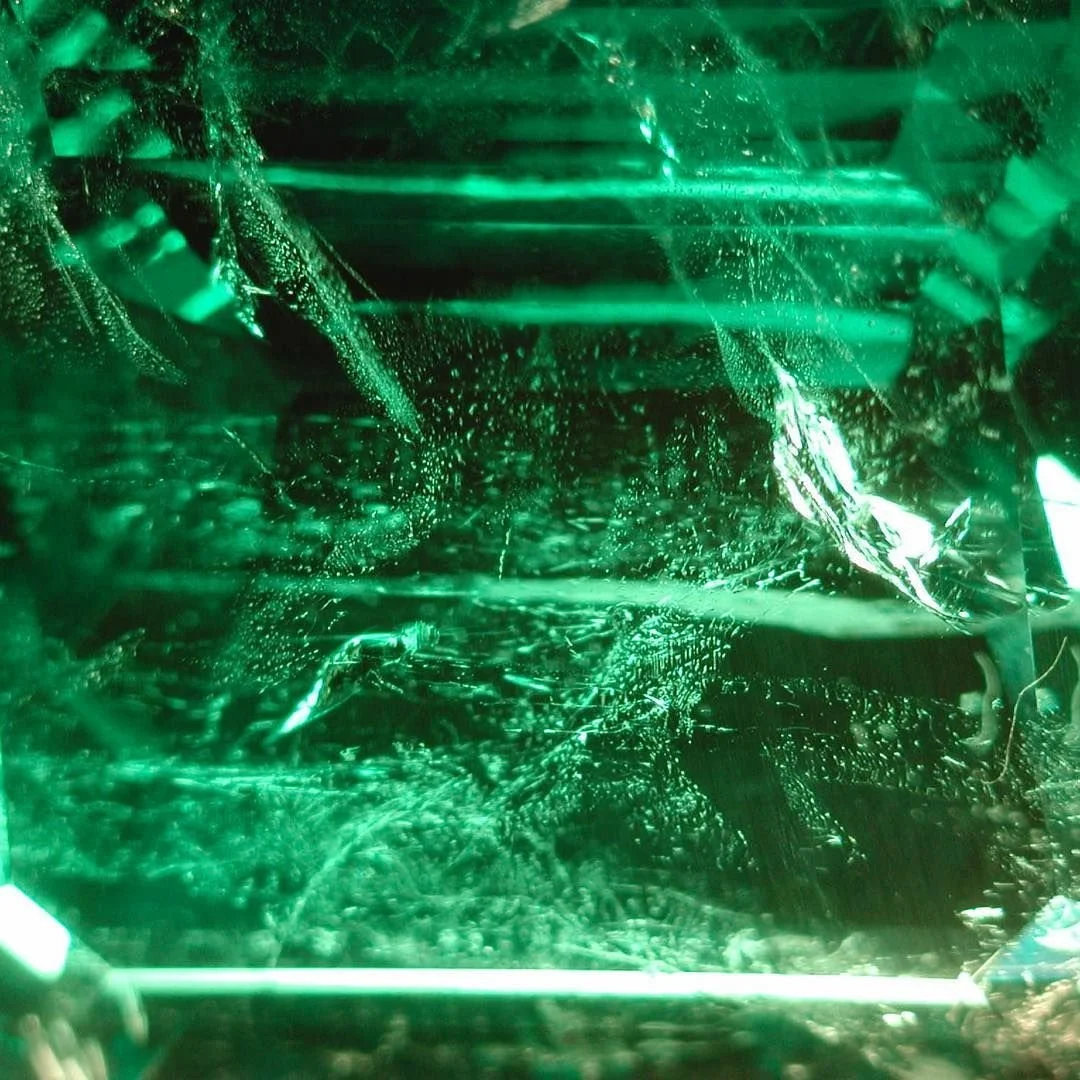
Every natural emerald contains inclusions. The collective term for these inclusions is jardin which is the French word for garden, adopted by the trade because the inclusion landscape of a fine emerald, viewed under magnification, resembles a garden: irregular, organic, layered, different in every stone.
GIA classifies emeralds as Type III gems, which means they are almost never found without internal characteristics. If a seller shows you a stone that is 100% clean under a 10x loupe, be skeptical. It is likely a lab-grown synthetic or a glass composite.
This is the inverse of diamond logic and it is the insight that separates a collector from a buyer. In diamonds, inclusions reduce value. In emeralds, the right inclusions confirm value. They are proof of natural origin. They are the stone's geological fingerprint. And in Colombian material specifically, they tell a gemologist exactly where the stone formed.
Three-phase inclusions — cavities containing trapped liquid, gas, and a solid mineral —are the gemological signature of the Colombian formation environment, specifically the hydrothermal brine conditions in the black shale formation unique to the Eastern Andes. Gübelin and GRS use three-phase inclusion analysis as one of the primary tools for confirming Colombian origin. When a laboratory confirms Colombian origin, it is largely doing so by reading the jardin. The inclusions are the certificate.
What matters for a collector is not the absence of jardin but its character. The 2026 market places a premium on stones where the internal patterns are wispy and light rather than dense and dark. If the jardin obscures the passage of light, the value declines. If it creates a unique, mossy landscape that allows the stone to glow, the price climbs significantly.
In the fine Colombian market, color consistently takes priority over clarity in the value hierarchy. A vivid, slightly included stone will typically outsell a strong-color, eye-clean stone of similar weight. This is the reverse of diamond valuation logic and catches many buyers unfamiliar with the emerald market by surprise.
That surprise is expensive. Understanding it before you acquire is the entire point.
Treatment: the question the certificate must answer
Practically every emerald on the market has oil or resin filling its surface-reaching fissures. The lab grading scale runs from None to Insignificant to Minor to Moderate to Significant. Each step up the scale reduces the stone's price by roughly 15 to 30 percent at fine quality.
A No Oil certificate — none — is the ultimate collector's designation. It means the stone is so structurally coherent and the crystal so clean that no enhancement was required or introduced. That is rare. It is priced accordingly. A minor oil designation is acceptable and common in fine material. Moderate or significant oiling changes the acquisition entirely.
Always have high-value stones lab graded before purchase. Oh, and always avoid ultrasonic cleaning it removes the oil and can leave the stone looking dramatically more included.
The laboratories that matter here: GIA and Gübelin both issue origin and treatment reports for Colombian emeralds that are accepted without question by every major auction house. The origin section of the report and the treatment section are the two lines that determine the acquisition.
What I look for
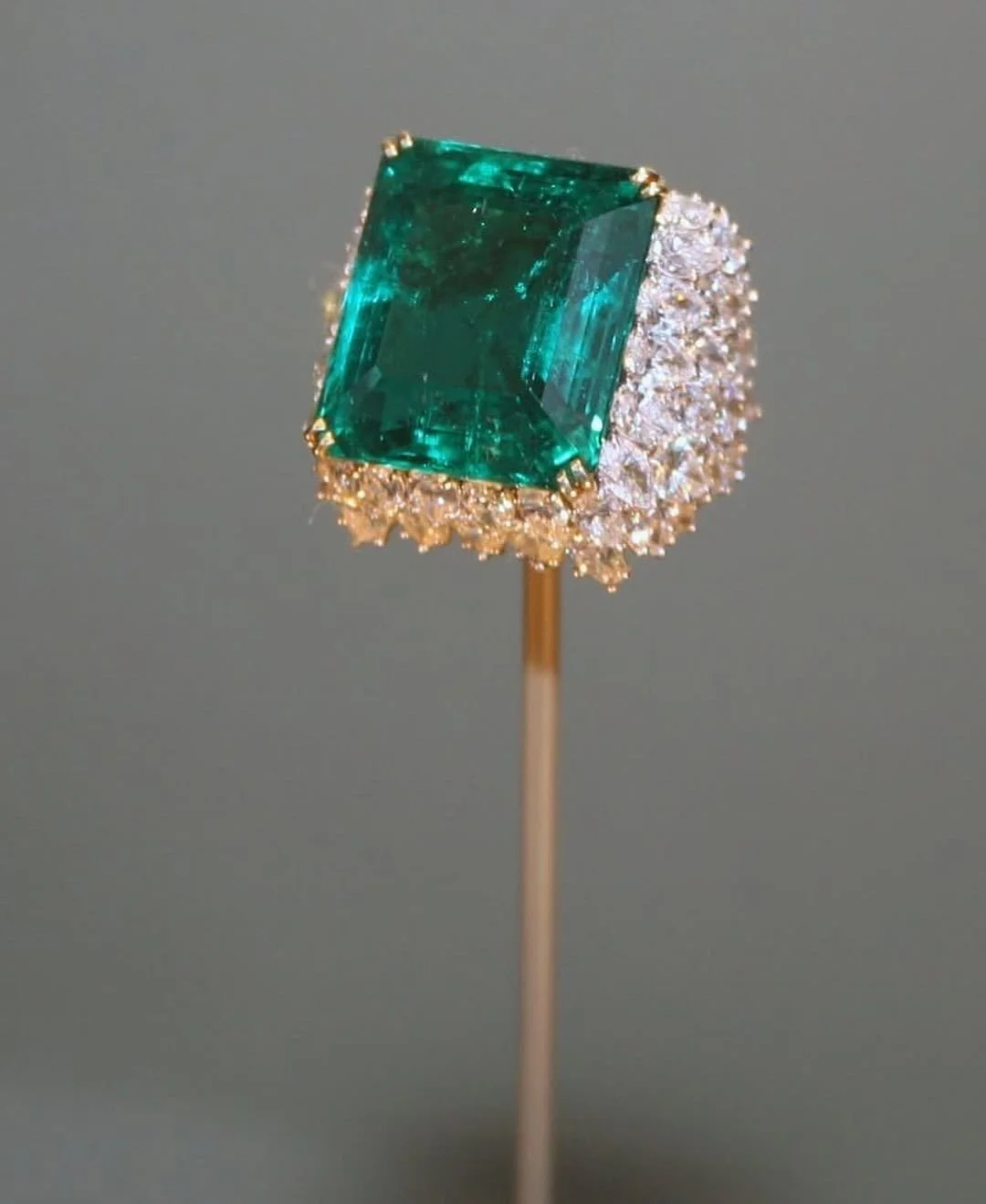
Colombian origin. Muzo where it is achievable and within the client's parameters, Chivor or Coscuez where the individual stone quality justifies it. Vivid, saturated green that holds in all light. A jardin that is present but does not interrupt the stone's transparency. Treatment graded minor or none. GIA or Gübelin certification confirming both origin and treatment status.
Size matters differently here than in ruby or sapphire. Fine emerald above three carats becomes rare quickly. A 2-carat fine vivid green emerald can be three times the per-carat price of a 1-carat stone of the same quality, and 5-carat fine stones routinely exceed $20,000 per carat.
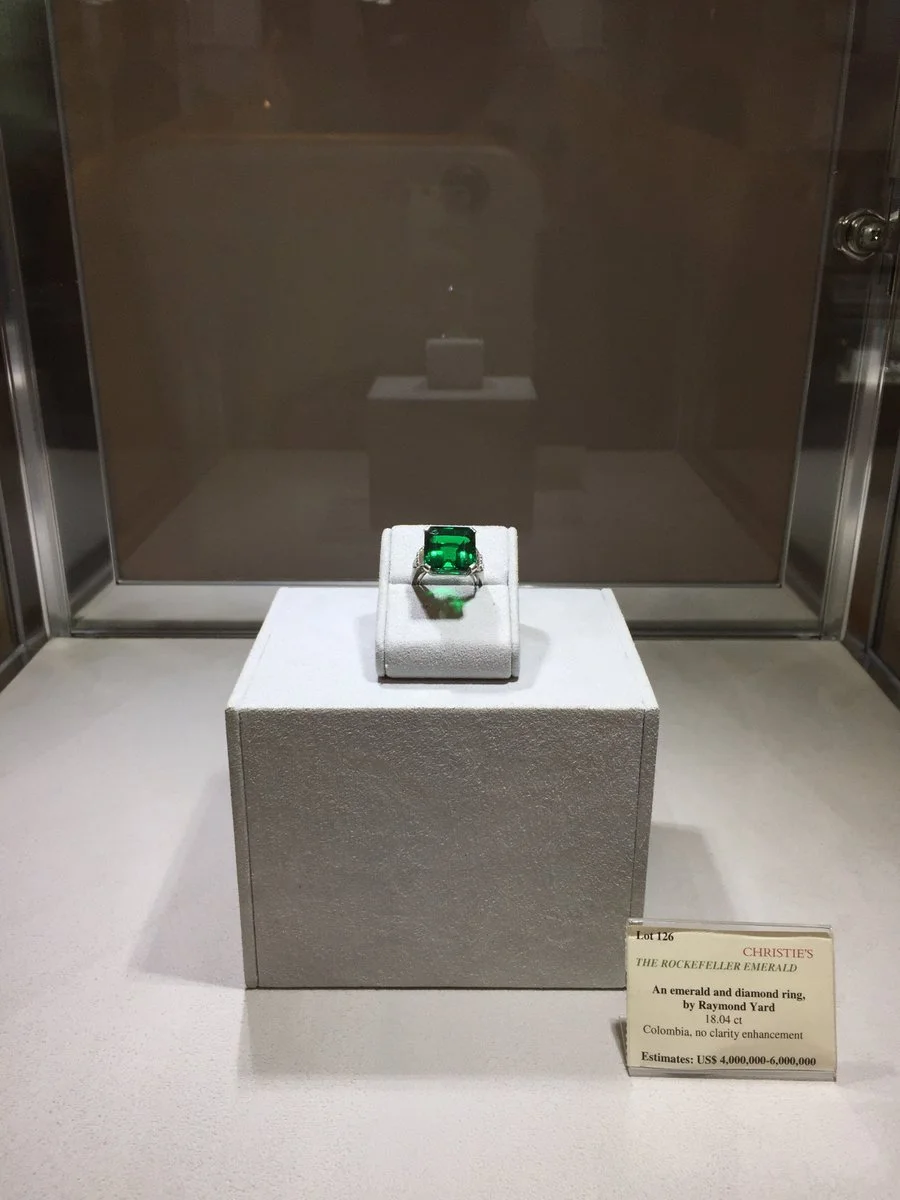
The Exciting Part: The Rockefeller Emerald- 18.04 carats, Colombian, Muzo, no oil holds the per-carat record for emerald at auction at $305,000 per carat. The Aga Khan Emerald, a 37-carat Colombian stone set in a Cartier brooch, sold for $8.8 million at Christie's Geneva in 2024 the highest total price ever achieved for an emerald at auction.
Both were Colombian. Both had documentation that left nothing unanswered. That is the standard.
Beauty is the beginning of the conversation with an emerald, not the end of it. The jardin tells you it is real. The certificate tells you where it came from and what was done to it. The color tells you whether it belongs in a collection.
All three have to answer correctly.
Private inquiries regarding Colombian emerald acquisition are handled personally by Claudia. Contact via WhatsApp or the SLIMMS website